

Quick Summary: Choosing between a large commercial flour mill and an Atta Chakki Machine depends on your daily grain quantity and budget. Small home kitchens work best with a domestic Atta Chakki Machine, while massive industrial plants require heavy commercial flour mills. Picking the right device saves money on electricity and stops machine breakdowns.
Choosing the right grinding tool for your kitchen or shop starts with a simple domestic model comparison against large flour mills. Every home cook needs a reliable device to grind fresh wheat daily without making loud factory noises.
Industrial factory owners prefer heavy flour mills to process tons of grain for local markets. Knowing the exact difference saves you from wasting money on the wrong grinding hardware.
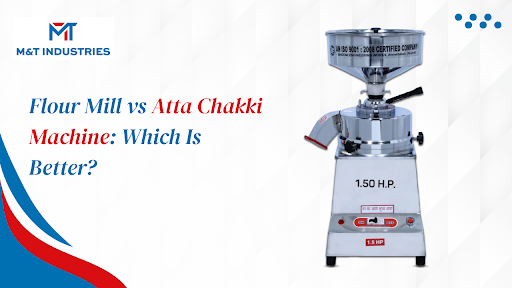
An Atta Chakki Machine uses stone or steel discs to grind wheat into soft powder for daily home roti making. Commercial flour mills use heavy metal hammers to process huge grain batches rapidly for retail grocery shops.
Domestic units fit easily inside standard kitchen corners without disturbing family members with loud vibrations. Heavy mills require separate factory rooms and powerful three-phase electrical connections to run safely.
| Machine Type | Power Source | Grinding Speed | Best Daily Output |
| Domestic Grinder | Single Phase | 1400 RPM | 5 to 10 Kg |
| Commercial Flour Mill | Three Phase | 2800 RPM | 50 to 100 Kg |
| Semi-Commercial Unit | Single Phase | 2000 RPM | 20 to 30 Kg |
| Heavy Pulverizer | Industrial Line | 3500 RPM | 150+ Kg |
Checking machine specs helps buyers select an Atta Chakki Machine matching their exact household cooking needs. Proper motor power selection protects your equipment from burning out during continuous festival cooking sessions.
Traditional stone discs inside a manual setup grind wheat grains slowly without creating high heat. Low grinding temperatures preserve essential vitamins and natural oils inside the flour for better-tasting chapatis.
High-speed metal blades in industrial mills heat up the flour and destroy important nutritional grain properties. Families notice a distinct softness in rotis made from slow stone-ground flour batches.
Local home appliance stores stock multiple brands of standard domestic machines for daily kitchen flour preparation. Smart buyers test-run a floor model Atta Chakki Machine before paying cash at the counter.
Checking the company’s warranty terms prevents expensive repair bills if the motor stops working after a month. Reliable appliance dealers provide direct technician support for home installation and troubleshooting.
Blunt stone surfaces fail to turn wheat grains into fine powder during regular kitchen use. Smooth grinding discs slip against hard wheat kernels and drop the daily flour output significantly.
Replacing worn stone parts restores the fast processing speed of your household flour preparation setup. Routine inspections catch cracked grinding plates before they ruin your family’s flour supply.
Follow us on Facebook and Instagram for more updates and spicy tips!
Click Here to Explore High Quality Food Processing Machines for Your Business Growth, Including Dry Masala Grinder, Masala Making Machine, Oil Making Machine, Double Stage Pulverizer Machine, MS 2 in 1 Pulverizer Machine, SS 2 in 1 Pulverizer Machine, Masala Blower Pulverizer, Gravy Machine, Vegetable Cutting Machine, and Papad Making Machine at Best Prices with Powerful Performance and Reliable Quality.
Domestic machines are built primarily for dry grains, and grinding wet items requires specialized commercial wet grinders.
A one-horsepower motor runs a standard home unit efficiently for regular family wheat grinding needs.
Users must clean the inner grinding chamber weekly to prevent flour residue buildup and fungal growth.
Standard home units plug directly into regular single-phase wall sockets without needing special wiring modifications.
Call 📞 Phone: +91 99980 59938 and let Food processing machinery supply the finest Atta Chakki Machine options for your kitchen and factory floor.