
Is your kitchen falling behind on orders? Are your sauces never quite the same twice? A gravy machine might be the fix you have been ignoring. If curries, purees, and pastes eat up half your prep time, it is time to look closer.
This blog walks you through the five clearest signs that prove that you definitely are in a problem and even guides a simple solution. So, let’s get started.
Manual grinding is slow. It tires your staff and slows down service. A gravy machine does the same job in minutes, not hours.
If your kitchen still relies on hand-grinding for bulk gravy, that alone is reason enough to upgrade.
Customers notice inconsistency. One day the gravy is thick, the next it is watery. This usually means your prep method is not reliable.
A gravy machine grinds every batch the same way. Same blade speed, same texture, same result. That consistency builds customer trust and repeat orders.
Peak hours punish slow kitchens. If your staff cannot keep up with tomato puree, onion paste, or ginger-garlic base, orders pile up.
Here is a quick look at what changes with the right equipment:
| Task | Without a Machine | With a Machine |
| Tomato puree (10 kg) | 40-50 minutes | Under 10 minutes |
| Ginger-garlic paste | Uneven texture | Smooth, uniform paste |
| Staff needed | 2-3 people | 1 person |
| Cleanup time | Long, messy | Quick rinse |
A capable gravy machine can process between 25 kg and 100 kg an hour, depending on the model. That kind of output changes how fast your kitchen can serve during a rush.
Old stone grinders and basic mixers are hard to clean. Food sticks. Parts trap grease. Hygiene suffers.
A stainless steel gravy machine solves this directly:
Health inspectors and customers both notice a clean kitchen. This upgrade protects your reputation.
If you already own basic equipment, jamming is a common complaint. Soaked beans, soft vegetables, and watery ingredients often choke weaker motors.
A proper wet gravy machine is built differently. It uses a heavy-duty copper wire motor with safety features that prevent the motor from getting stuck. This means fewer breakdowns and longer working hours without a slowdown. If your current setup keeps failing on wet, heavy loads, that is a clear sign your equipment is not built for real kitchen pressure.
Not every gravy machine suits every kitchen. Before you buy, check these points.
Getting this right the first time saves you money and downtime later.
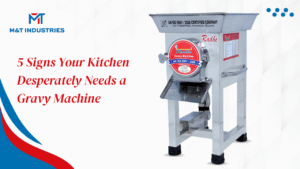
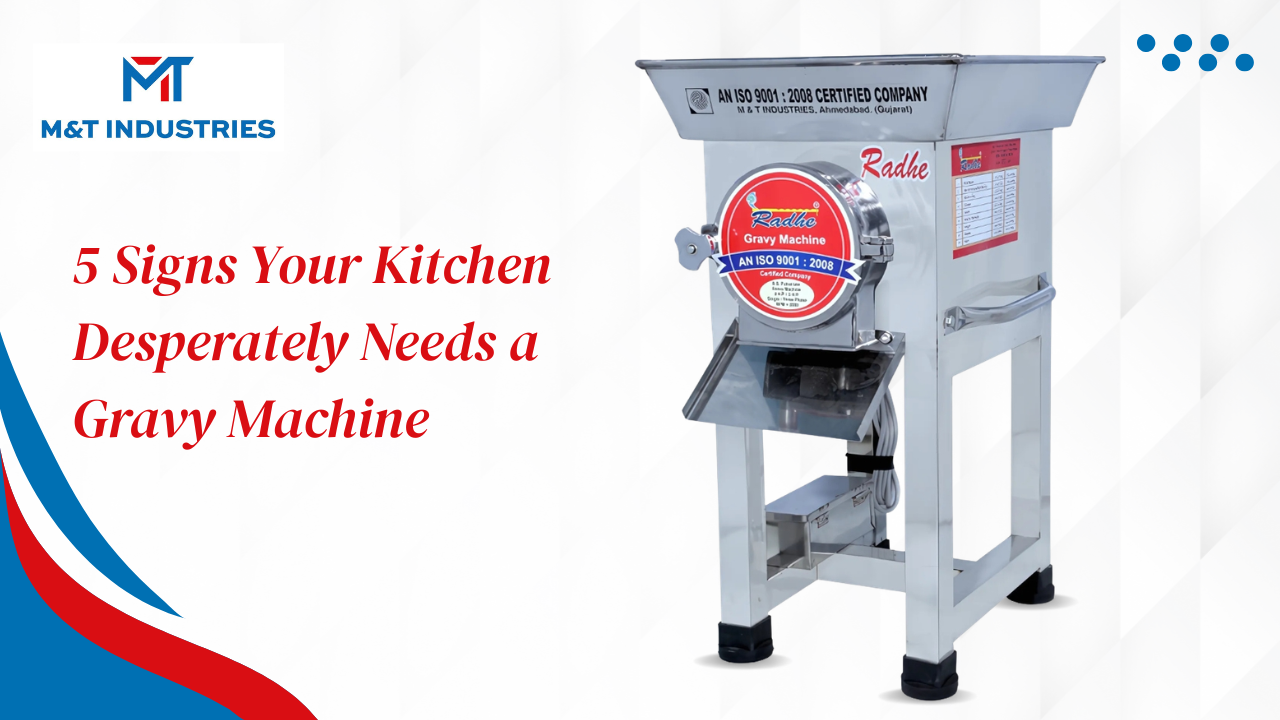
Food Processing Machinery designs its gravy machine range with a fully stainless steel body, chamber, cutter, and jali set. Each unit runs on a heavy-duty copper wire motor built for long shifts. Models range from 1 HP single-phase units for smaller kitchens to 7.5 HP three-phase units for large catering operations. This range means a small restaurant and a big hotel kitchen can both find a fit.
This equipment is not just for large hotels. It fits:
If your kitchen matches any of these, a gravy machine pays for itself through saved labour and faster service.
Slow prep, inconsistent taste, messy cleanup, and constant jamming are not small problems. They add up and cost you, customers. A well-built gravy machine fixes all four at once. This is more efficient, ensures quality standards, and allows your kitchen to operate during peak periods. When any of the five signals above ring true in your kitchen, then your kitchen is trying to tell you something. Pay attention now before an even busier weekend does it for you.
Time to Upgrade Your Kitchen? Do not wait for another busy shift to expose the same problems. Reach out on WhatsApp at +91 99980 59938 to ask about machine models, pricing, and delivery for your kitchen size. Also, follow us on our social media platforms, WhatsApp, Instagram, YouTube, and Facebook, for more such machinery updates.
This can range from 25 kg to 100 kg depending on the horsepower of the gravy machine.
Yes. This machine is designed to grind water-based or soft materials without getting jammed.
The cost of this machine starts from ₹10,400 and can vary up to ₹60,000 depending upon the horsepower of the machine.
No. Stainless steel parts detach easily and rinse clean quickly, unlike stone-based grinders.
Message the WhatsApp number above with your kitchen size and daily volume. You will get model suggestions and pricing directly.